How Altitude Adjustments Alter Performance Metrics in High-Elevation Matches and Races for Strategic Selections
Avery Schmitt · Aug 26, 2026
How Altitude Adjustments Alter Performance Metrics in High-Elevation Matches and Races for Strategic Selections
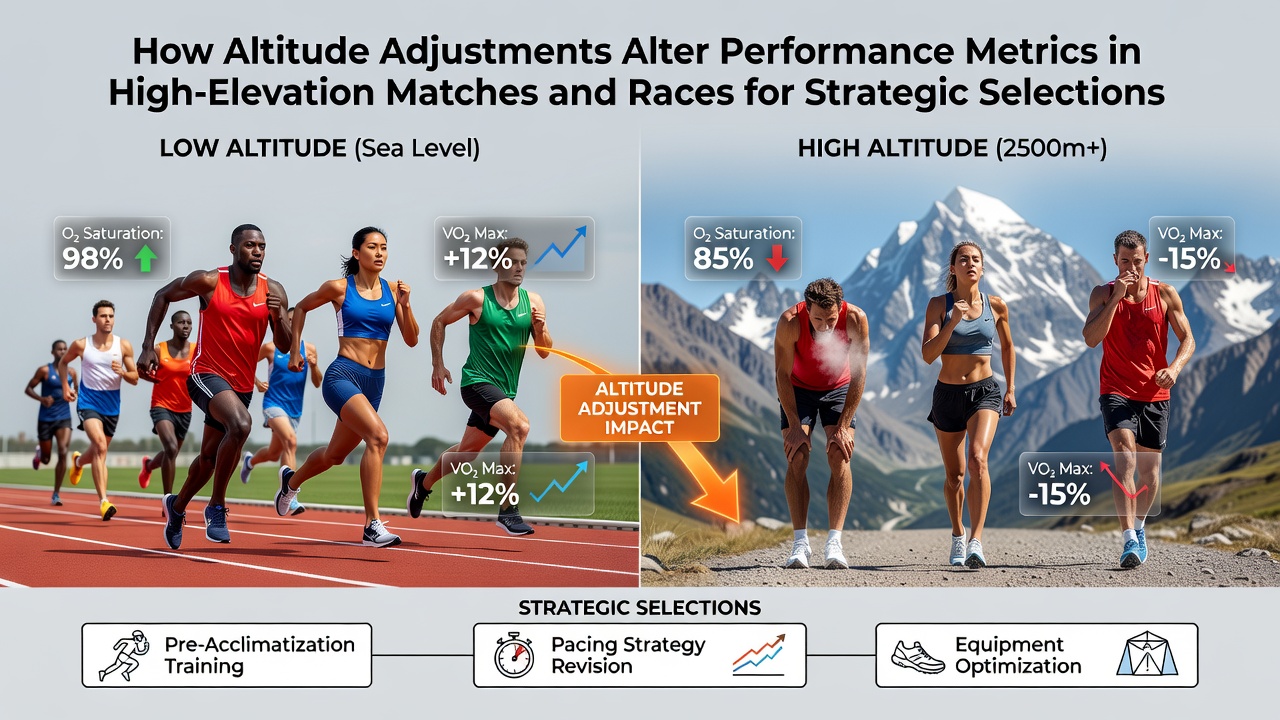
High-elevation venues change how athletes perform because lower oxygen levels reduce aerobic capacity and force adjustments in pacing, recovery, and hydration. Research from institutions such as the Australian Institute of Sport shows that every 1,000 meters of altitude gain above sea level cuts VO2 max by roughly 8 to 11 percent, which directly affects endurance events and team sports that rely on sustained effort. Observers note that these shifts appear consistently across soccer matches in La Paz, marathon races in the Rockies, and cycling stages in the Alps, where competitors must recalibrate their effort distribution to maintain output.
Physiological Changes at Elevation
Lower air pressure means fewer oxygen molecules per breath, so muscles receive less fuel during prolonged activity and heart rates climb faster to compensate. Studies from the University of Calgary indicate that blood oxygen saturation can drop from 98 percent at sea level to 85 percent or lower at 3,000 meters, triggering earlier fatigue in events lasting beyond two minutes. Sprinters experience smaller disruptions because their efforts draw mainly on anaerobic systems, yet even short bursts show minor speed reductions when athletes arrive without prior acclimatization. Teams and individual competitors therefore schedule altitude camps weeks before major fixtures to allow red blood cell production to rise and buffer the initial performance dip.
Performance Data from Specific Venues
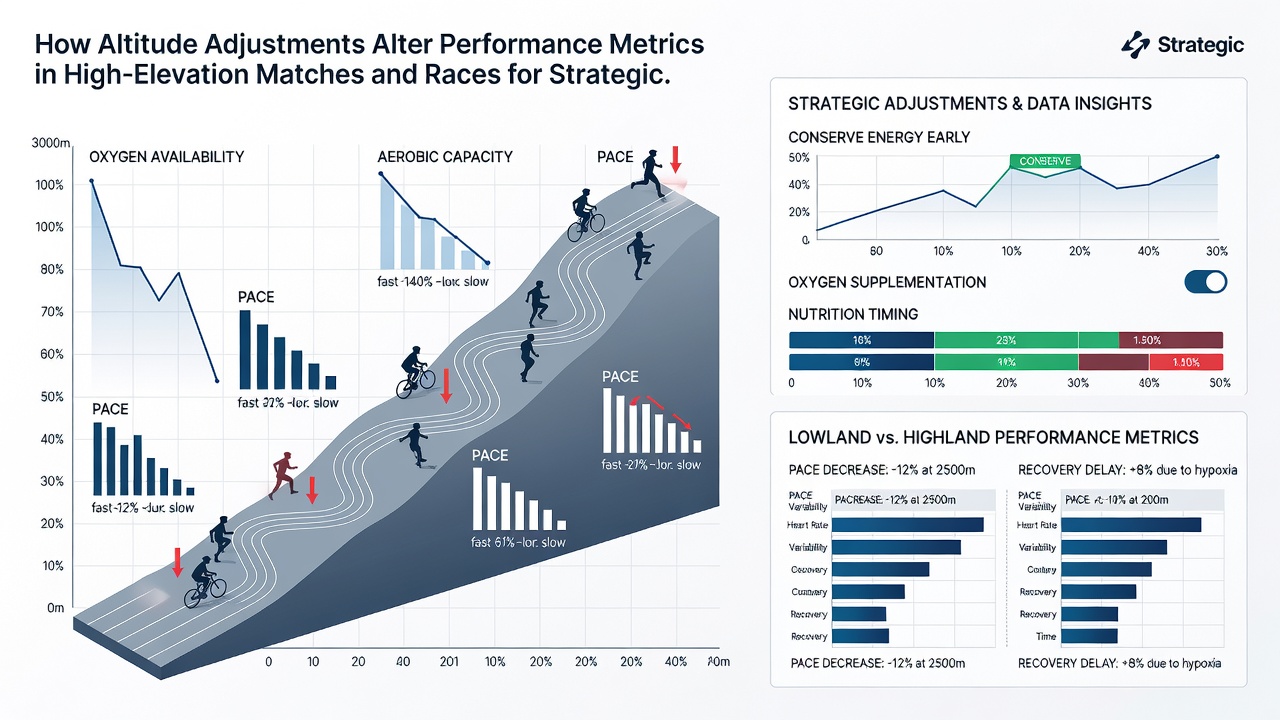
Records from Denver's 1,609-meter elevation demonstrate that visiting NFL teams post lower rushing yardage and higher penalty counts during the first quarter compared with home squads already adapted to the thinner air. In soccer, Bolivian clubs playing at 3,600 meters in La Paz have recorded average match distances covered by visiting sides falling by 12 percent after the 60-minute mark, according to tracking data compiled by CONMEBOL. Track and field events at the same altitude show 5,000-meter and 10,000-meter times lengthening by 4 to 7 percent for non-acclimatized runners, while 100-meter and 200-meter results remain within 1 percent of sea-level marks. These patterns repeat in August 2026 when several European clubs scheduled pre-season tours through Andean cities, giving analysts fresh datasets on recovery timelines between matches played 48 hours apart at elevation.
Strategic Adaptations for Teams and Athletes
Coaches alter lineups and training loads once they identify venues above 1,500 meters on the fixture list. Hydration protocols increase fluid intake by 20 to 30 percent daily while carbohydrate loading begins earlier to offset glycogen depletion that occurs faster in thinner air. Substitutions occur more frequently in the second half because central midfielders and forwards cover less ground after the hour mark. Jockeys in high-country horse races similarly shorten early fractions to conserve energy for the final furlongs, a tactic reflected in sectional timing splits published by racing authorities in Colorado and New Mexico. Those who've studied fixture lists observe that squads returning from sea-level venues to high elevation within 72 hours post fewer clean sheets and lower goal tallies in the opening 30 minutes.
Recent Metrics and Selection Implications
Figures released after the 2025 Pan American Games in Bolivia revealed that medal contenders who spent at least 14 days above 2,500 meters improved their finishing positions by an average of 3.2 places compared with athletes who arrived five days before competition. In August 2026, several professional cycling teams will stage training blocks in the Pyrenees before the Vuelta a España stages that climb above 2,000 meters, allowing power-output data to be compared against sea-level benchmarks. Selection committees now incorporate altitude-adjusted expected performance curves when ranking candidates for multi-stage events, adjusting predicted times by the established 1 percent slowdown per 1,000 meters rule derived from aggregated race results across three decades.
Conclusion
Altitude forces measurable recalibrations in speed, endurance, and recovery across multiple sports, and organizations that track these variables produce clearer selection frameworks for upcoming high-elevation fixtures. Data from governing bodies and academic centers continue to refine the adjustments applied to pacing plans and roster decisions, giving competitors and analysts alike concrete benchmarks rather than guesswork when elevation appears on the schedule.